
















November 2026 | Anti-Counterfeiting and Supply Chain Traceability
Tracing Counterfeits Back Through the Supply Chain: What a case from pharmacy shelf to production site teaches pharmaceutical brand owners
Most people assume that once a medicine reaches a pharmacy, its origin is settled. A recent investigation in India shows how much work it can take to answer a simple question: where did this pack really come from?
In October 2026, an investigation in India uncovered a suspected interstate distribution network involving counterfeit blood-pressure medication. According to court documents reported in the Indian press, investigators traced suspicious medicine strips from pharmacies in Gurugram through wholesalers and distributors across several Indian states. The trail eventually led to a pharmaceutical manufacturing facility in Uttarakhand, where authorities recovered manufacturing equipment and packaging materials, including blister-packaging components.
The manufacturer of the genuine medication confirmed to investigators that seized batches were counterfeit and carried forged packaging. The case remains subject to judicial proceedings: a court noted that laboratory evidence was insufficient at that stage to establish one defendant’s responsibility for manufacturing the suspected counterfeit medicines.
Why a multi-stage supply chain makes counterfeits hard to trace
Look at the path investigators had to follow: pharmacy, wholesaler, distributor, more distributors across state lines, and finally a production site. Every handover is a point where a suspicious product can enter – and every handover adds a link that has to be reconstructed later.
The case illustrates how difficult it is to identify suspicious products once they have entered a multi-stage pharmaceutical distribution network. Even when a product reaches a legitimate pharmacy, its origin may require further investigation.
There is a second lesson in the details. Investigators found packaging materials, including blister components, at the production site. As in many counterfeiting cases, packaging was part of the operation: forged packaging is what lets a counterfeit look like the genuine product on the shelf.
Not just a number, but a trusted identity
Many medicines today carry batch numbers or codes. But the important question is not only whether a medicine carries an identification number. It is whether that identity can be trusted.
A printed number can be copied. A batch code can be reused on a forged pack. What makes the difference is whether each pack carries a secure, unique identity that can be verified – and whether the pack shows if it has been manipulated.

How to make pharmaceutical origin verifiable: a step-by-step approach
Step 1: Map your distribution chain
Start by mapping how your products move from production to patient: which wholesalers, which distributors, which regions. Identify where products change hands, where they are repacked and where your visibility ends. These are the points where verification matters most.
Step 2: Give each pack a unique, secure identifier
Serialization assigns each individual pack its own identifier. To be useful against counterfeiting, these UIDs should be unique and not predictable, so that they cannot simply be guessed or generated. Secure identifiers help distinguish individual packages from one another – and make a copied code much easier to spot when the same identity appears more than once.
Step 3: Protect the pack with tamper-evident features
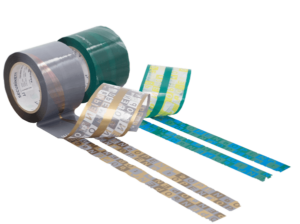
A unique code is only as strong as its connection to the pack. Tamper-evident labels and closure seals make it visible when a pack has been opened, and our SecurityLabels can be designed so that a VOID or OPEN message appears when someone tries to remove them. Combining these features with serialization strengthens the protection of legitimate pharmaceutical supply chains.
Step 4: Record verification events along the chain
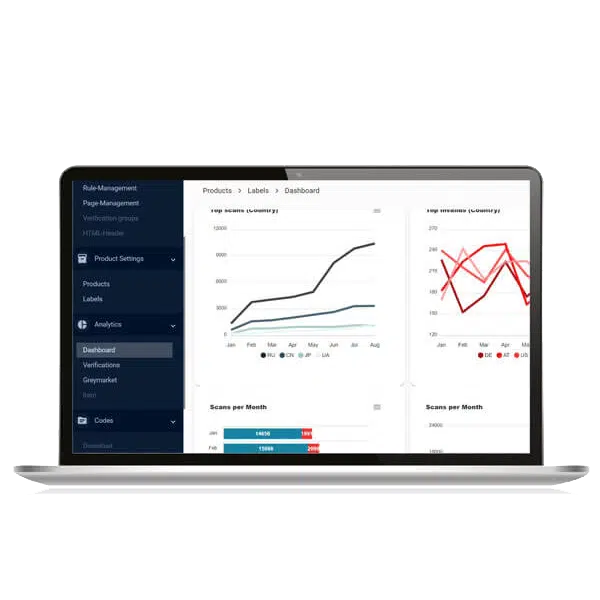
With CODIKETT, our cloud-based platform, product identities can be verified digitally – by pharmacists, distributors, inspectors or patients. When verification events are recorded, they build a picture of where a product has been checked. That information can support the verification of distribution histories and make it easier to reconstruct a product’s path.
Step 5: : Act on unusual signals
Verification data can reveal patterns that deserve attention: a code checked in a region it was never shipped to, or the same identity verified several times. Such signals call for further investigation; they do not prove counterfeiting on their own. But they give brand-protection and quality teams a head start instead of relying solely on complaints or chance discoveries.
Traceability supports enforcement – it does not replace it
Product security will not replace the work of regulators, investigators and courts, as the ongoing proceedings in this case show. What it can do is make the genuine product easier to verify and suspicious products easier to trace. For patients, that adds an important layer of trust. For manufacturers, it adds visibility where it is usually hardest to get: after the product has left the factory.

Reviewing your pharmaceutical supply chain risk?
If you want to review how verifiable your products’ origin is today, we are happy to help. Learn more about our QR code and serialization solutions or request free sample labels for your requirements.