




















OUR SOLUTION FOR THE FURNITURE INDUSTRY
LABELS AND DIGITAL PRODUCT PASSPORTS FOR FURNITURE

KEY PAIN POINTS FACING THE FURNITURE INDUSTRY
DEMANDING SURFACES AND FURNITURE LIFECYCLE REQUIREMENTS
Furniture manufacturers will be among the first industries affected by the EU Digital Product Passport requirements. Manufacturers and suppliers face a demanding labeling environment characterized by several interrelated challenges. Adhesion is often unreliable on natural and coated materials, particularly on wood, veneers, and other low-energy surfaces. In addition, labels are exposed to mechanical stress throughout extended product lifecycles, including transport, installation, and everyday consumer use. Another critical factor is the need for traceability across distributed supply chains, which frequently involve multiple production and assembly stages. Finally, labeling solutions must withstand variable environmental conditions such as humidity fluctuations, temperature changes, and abrasion during handling, storage, and retail display.
MAIN INDUSTRY ISSUES
- Integration of product identification into digital ecosystems, particularly the Digital Product Passport (DPP) framework
- Ensuring machine-readable data (e.g. QR codes) remains stable over time and across logistics chains
- Increasing pressure for counterfeit protection and product authenticity verification
- Standardization of labeling across diverse product lines and materials
MAIN ISSUES FOR THE CONSUMER
- Need for transparent product information access via mobile scanning
- Expectation of long-lasting, readable identification on furniture products
- Growing demand for verifiable sustainability and origin data
- Trust in product authenticity throughout the entire product lifecycle
TO ADDRESS THESE CHALLENGES, SPECIALIZED HIGH-ADHESION LABEL CONSTRUCTIONS ARE REQUIRED - PARTICULARLY FOR DIFFICULT SUBSTRATES AND LONG-TERM USE CASES
OUR SOLUTIONS FOR THE FURNITURE INDUSTRY
Furniture components often require labeling solutions that go beyond standard self-adhesive performance. Surfaces such as untreated or structured wood, as well as furniture exposed to long lifecycle conditions, create significant challenges for reliable label adhesion and long-term readability.
Our high-adhesion label solutions are engineered specifically for these difficult substrates, ensuring secure bonding even under mechanical stress, handling, and environmental exposure.
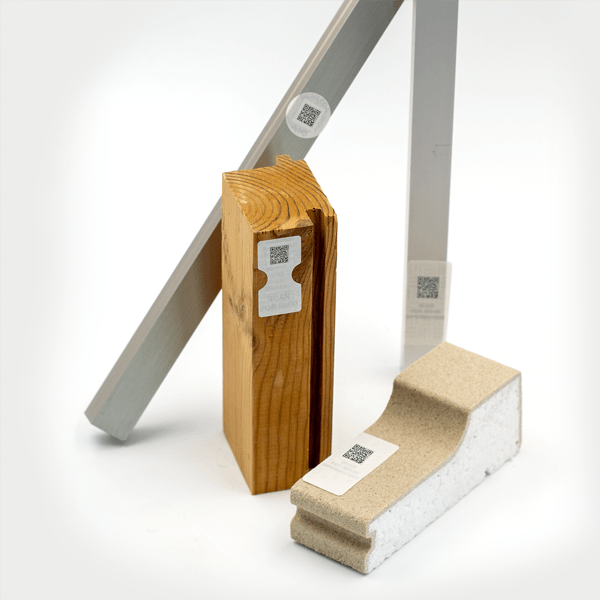
DURABLE LABELS FOR WOOD, COATED AND DEMANDING FURNITURE SUBSTRATES
HIGH-PERFORMANCE LABEL SOLUTIONS FOR FURNITURE APPLICATIONS
To address these challenges, specialized high-adhesion label constructions are required—particularly for difficult substrates and long-term use cases.
Our label solutions are engineered for:
- Secure adhesion on challenging furniture surfaces, including wood, textured and coated materials
- Long-term durability across the full product lifecycle, from manufacturing to end use
- Stable integration of QR codes for Digital Product Passport applications
- Reliable performance under mechanical and environmental stress conditions
These characteristics ensure consistent identification even where conventional self-adhesive labels reach their performance limits.
LONG-TERM DURABILITY IN INDUSTRIAL USE
Furniture products create unique DPP challenges because labels must remain readable for decades while withstanding cleaning, UV exposure and mechanical wear. Our solutions are designed for long-term performance in real-world conditions, supporting:
- Permanent identification of components
- Resistance to mechanical wear
- Stable QR code readability over time
- Consistent performance in logistics, retail, and end-use environments
This makes them suitable not only for furniture production, but also for supply chain tracking and aftersales traceability.
TAMPER-EVIDENT SECURITY FOR PRODUCT INTEGRITY
To support authenticity and fraud prevention, labels can be configured with tamper-evident VOID features. This provides a visible indication of manipulation attempts and reinforces product integrity throughout the supply chain.
This adds a critical security layer for:
- Authenticity verification
- Prevention of unauthorized label transfer
- Protection of digital product data integrity
The combination of durable adhesion and visible tamper evidence strengthens trust in product identity across the entire value chain.
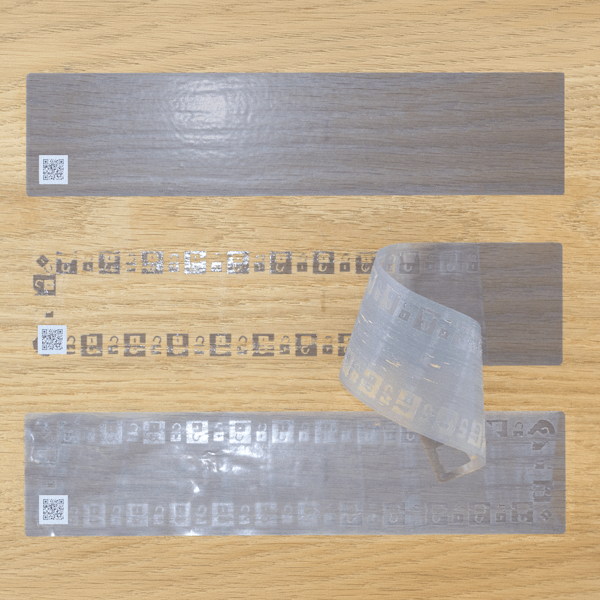
QR CODE LABELS ARE A KEY ENABLER FOR CONNECTING PHYSICAL FURNITURE PRODUCTS WITH DIGITAL DATA RECORDS
RELIABLE IDENTIFICATION FOR THE DIGITAL PRODUCT PASSPORT (DPP)
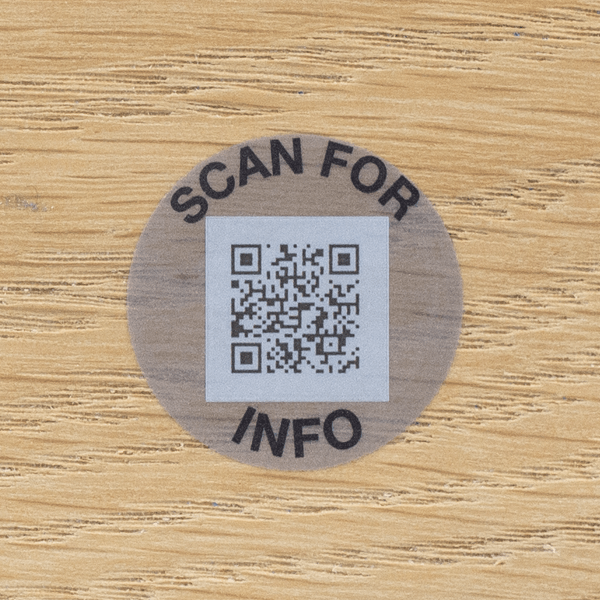
For furniture manufacturers, this introduces new requirements:
- Reliable readability over the entire product lifecycle
- Stable adhesion on low-energy or textured surfaces
- Resistance to abrasion, humidity, and handling
- Secure data access via QR or variable data encoding
Our label systems are designed to support these requirements while maintaining long-term functional stability on demanding materials.
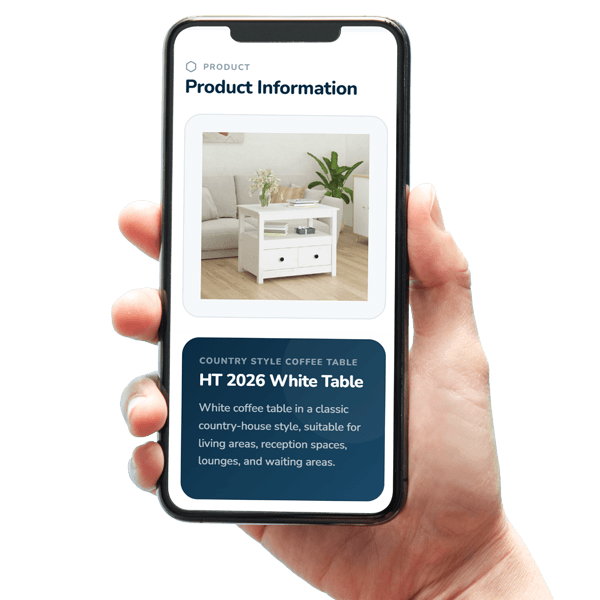
How Digital Product Passport work for Furniture:
- Give every furniture item a unique ID
- Store material information
- Connect supplier data
- Link sustainable documents
- Provide repair information
- Enable recycling information
DIGITAL PRODUCT PASSPORT (DPP) ENABLEMENT FOR FURNITURE
Within the context of the Digital Product Passport, furniture labeling becomes a critical interface between physical products and digital information systems.
Our solutions support:
- Persistent product-to-data linkage via QR codes
- Stable machine readability across extended timeframes
- Compatibility with evolving regulatory and compliance frameworks
- Scalable implementation across furniture product portfolios
FURNITURE-SPECIFIC FAQS
The EU’s Ecodesign for Sustainable Products Regulation (ESPR) introduces the Digital Product Passport (DPP) to improve transparency, sustainability and circularity across product lifecycles. Furniture has been identified as one of the priority product groups under the ESPR Working Plan.
A Digital Product Passport enables manufacturers, consumers, repair providers and recyclers to access reliable product information throughout the product’s lifetime. It supports regulatory compliance while making it easier to repair, refurbish, reuse and recycle furniture instead of disposing of it.
While the final furniture-specific requirements are still being defined, a furniture Digital Product Passport is expected to include information such as:
- Material composition and recycled content
- Wood species and sourcing information
- Components and spare parts
- Repair and maintenance instructions
- Disassembly guidance
- Chemicals or substances of concern
- Durability and expected service life
- Recycling and end-of-life instructions
- Compliance documentation and declarations
Providing this information helps all stakeholders maximise product lifetime and recover valuable materials at end of life.
The final retention period for furniture Digital Product Passports has not yet been specified. The upcoming furniture-specific legislation under the ESPR will define the exact requirements.
However, because furniture is a long-life product, manufacturers should plan for product information to remain accessible for many years—potentially throughout the product’s service life—to support repairs, resale, refurbishment and recycling. The ESPR also requires DPP information to remain available even if the original manufacturer no longer exists.
Not necessarily.
The level of identification depends on the specific product requirements. Some products may be identified at model or batch level, while others may require a unique identifier for each individual item.
For furniture, unit-level identification offers significant advantages beyond compliance. A unique Digital Product Passport enables individual service histories, warranty management, repair documentation, authentication and traceability throughout the entire product lifecycle.
Yes, if the right marking technology is used.
Many manufacturers rely on engraved metal plates for long-term identification. However, high-performance labels can provide the same durability while offering additional advantages. Modern label materials withstand abrasion, moisture, UV exposure and cleaning chemicals, making them suitable for demanding furniture applications.
Tamper-evident security labels also provide protection against removal or replacement, ensuring that the product identity remains authentic throughout its lifetime.
Effective recycling starts with knowing exactly what a product is made of.
A Digital Product Passport allows recyclers to identify materials, coatings, adhesives and components before dismantling a product. This simplifies material separation, increases recycling efficiency and enables higher-quality material recovery.
Traceability also supports refurbishment and reuse by making replacement parts, repair instructions and maintenance information readily available, extending the useful life of furniture before recycling becomes necessary.
Companies do not need to wait for the final furniture legislation before taking action. Good preparation includes:
- Mapping existing product and material data
- Identifying data gaps across the supply chain
- Standardising product information
- Defining unique product identifiers
- Selecting durable data carriers such as secure QR code labels
- Evaluating Digital Product Passport software solutions
- Running pilot projects on selected product lines
Manufacturers that establish these foundations early will be well positioned for future ESPR requirements while also improving product traceability, customer service and circular business models.
USE CASE FURNITURE INDUSTRY
SPECIFIC APPLICATION OF A FURNITURE MANUFACTURER
Early Digital Product Passport Implementation for Solid Wood Furniture
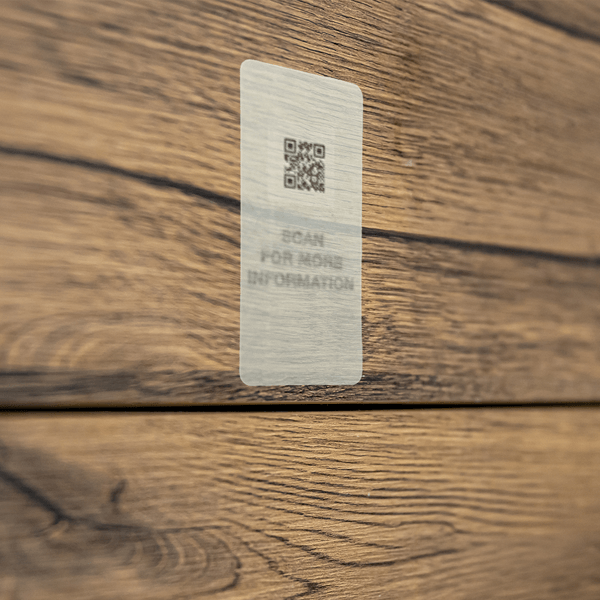
A mid-sized furniture manufacturer specializing in solid wood furniture is preparing for the upcoming regulatory rollout of the Digital Product Passport (DPP). In order to avoid implementation risks at a later mandatory stage, the company decides to proactively test DPP integration in a controlled pilot environment.
THE ISSUE
PROBLEM
Solid wood furniture presents significant challenges for reliable product identification. The surfaces are natural, often untreated or variably finished, which leads to inconsistent adhesion performance for standard labels. At the same time, the company needs to ensure that each furniture piece can be uniquely identified and digitally linked throughout the entire lifecycle, including production, logistics, retail, and end-user ownership. Another key concern is future-proof traceability: the labeling system must remain stable and readable over long time periods while also preventing unauthorized transfer of labels between products.
THE SOLUTION
VOID-LABEL WITH UID
Together with the manufacturer, a pilot project was initiated using high-adhesion labels equipped with unique QR codes for item-level identification. These labels were integrated into a Digital Product Passport infrastructure via a connection to the Codikett 2.0 system, enabling seamless digital product data management. The label construction was specifically selected to ensure reliable bonding on challenging solid wood surfaces, supporting consistent scanning performance across the supply chain.
THE RESULT
PILOT PROJECT SUCCESSFUL
The initial pilot phase delivered highly positive results. Label adhesion on solid wood proved stable under real-world handling conditions, and QR code readability remained consistent throughout production and logistics testing. Based on these outcomes, the next development step is already planned: upgrading the labels with a VOID tamper-evident feature to prevent unnoticed transfer between furniture items and further strengthen product integrity within the DPP framework.
WE PROVIDE SAMPLE BROCHURES FOR SPECIFIC INDUSTRIES AND APPLICATIONS
GET YOUR FREE SAMPLES FOR FURNITURE INDUSTRY
ADDED VALUE FOR FURNITURE MANUFACTURERS
Supply Chain Transparency
- Improved Production Control
- Enhanced After-Sales and Customer Service
- Sustainability and Compliance Reporting
- Inventory Accuracy and Loss Reduction
- Foundation for Circular Economy Models
- Scalable Digital Infrastructure for Future Regulations

FEEDBACK FROM OUR SATISFIED FURNITURE CUSTOMER
LET'S DISCUSS YOUR APPLICATION
BOOK YOUR CALL
Book a free 30-minute consultation to discuss your specific requirements and explore the best solutions for your product security needs. Our experts are here to guide you and help you take the next step toward stronger brand protection.