














December 2026 | Brand Protection
What one week of border checks in Romania teaches brand owners about counterfeits outside established channels
When counterfeit seizures make the news, it is usually because of their size: tens of thousands of items, one container, one big number. A weekly report from Romania’s border police tells a different and in some ways more revealing story.
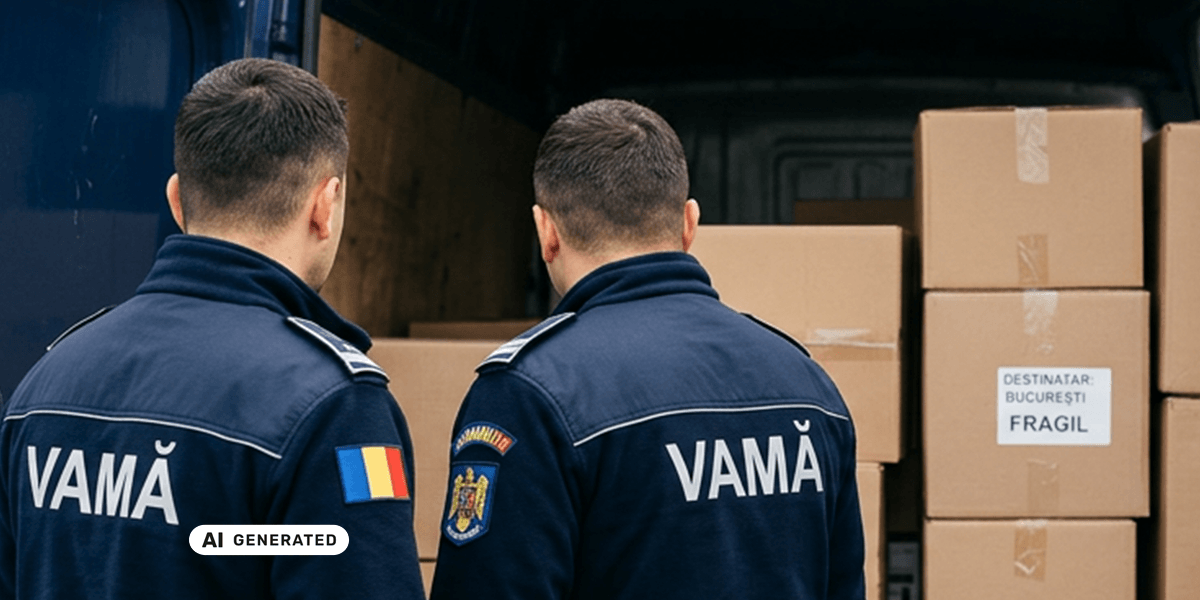
Between November 1 and 7, 2026, Romanian border police recorded 37 cases involving goods suspected of infringing intellectual property rights. In total, officers discovered 4,890 potentially counterfeit articles with an estimated value of approximately RON 1.5 million. Investigations are continuing.
In the same period, authorities also intercepted more than 148,000 cigarettes without the required tax stamps. That is a separate finding – a tax and excise matter – and it should not automatically be classified as counterfeit branded products.
Many cases, few items each
The number that stands out is not 4,890. It is 37. Spread across 37 cases, that is on average only around 130 items per case.
This reflects a pattern that matters for brand owners: counterfeit products can move through international transport networks in relatively small consignments. Small shipments are less conspicuous, easier to spread across many routes and harder to connect to one another. For authorities, each one requires its own check. For brand owners, each one is just a small piece of a larger picture they rarely see.
The challenge: products outside established channels
For manufacturers, detecting unauthorized products becomes particularly challenging when goods move outside established distribution channels. Inside the authorized network, brand owners know their partners, their volumes and their routes. Outside it, products – genuine or not – disappear from view.
That is also where the line between counterfeiting and the grey market can blur. Counterfeits are unauthorized copies. Grey-market goods are genuine products sold outside the channels or markets the brand owner intended. Both undermine control over where and how a brand reaches consumers, and both are harder to spot when they travel in small quantities.
Making product identity verifiable beyond the factory gate
No brand owner can inspect every parcel crossing a border. But brand owners can make sure that their genuine products carry an identity that stays verifiable wherever they end up. Product identity should remain verifiable beyond the point of manufacture.
A unique identity for every product
Unique identifiers (UIDs) – unique and not predictable – distinguish each individual product from every other. Encoded in a QR code, a hidden code or an NFC tag, they can be checked in any market. Because they cannot simply be guessed or generated, a copied code becomes visible when the same identity appears in more than one place.
A physical anchor that shows manipulation
An identity only helps if it stays connected to the right product. Tamper-evident identification features can make certain forms of label replacement or packaging manipulation more visible. With our SecurityLabels, a VOID effect can appear when someone tries to remove the label, so a genuine identity cannot simply be moved to another product without leaving evidence.
Patterns instead of single incidents
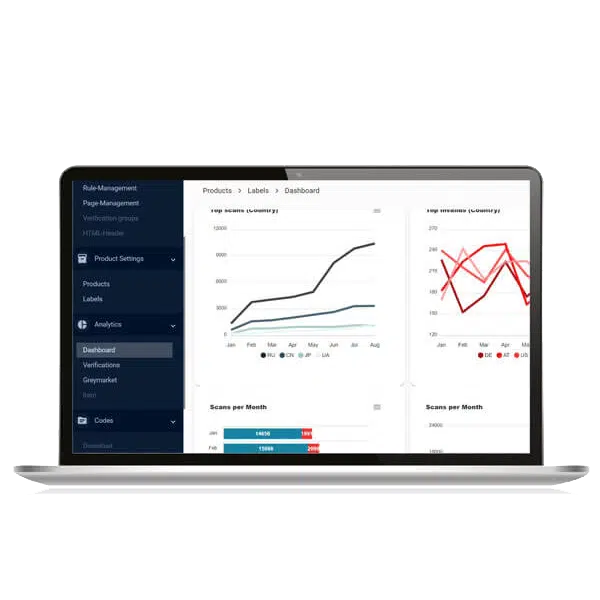
This is where small consignments become less of an advantage for counterfeiters. With CODIKETT, our cloud-based platform, verifications by inspectors, distributors, retailers or consumers can be recorded and analyzed together. Repeated use of the same product identity or unexpected geographic activity – for example scans in a market the product was never shipped to – can point to unauthorized distribution, even if each individual shipment was small.
Such signals require further investigation and do not by themselves prove counterfeiting. But they connect the dots that individual cases leave scattered.
Seeing the bigger picture
The Romanian figures are a reminder that counterfeiting is not only a matter of spectacular single seizures. It is also a steady flow of small shipments that are easy to miss one by one. Brand owners who make their products verifiable everywhere gain something that is otherwise hard to get: visibility into where their brand actually appears.
If you would like to explore how unique product identities and digital verification could support your brand protection, we are happy to help. Learn more about secure UID issuance or request free sample labels for your requirements.
FAQs
Small consignments are less conspicuous and can be spread across many routes and transport providers. Each shipment requires its own check, and individual shipments are hard to connect to one another. For brand owners, small shipments rarely add up to a visible picture without additional data.
By giving each product a unique, verifiable identity and recording verification events, brand owners can see where products are checked. Scans in unexpected markets or repeated use of the same identity can point to unauthorized distribution. Combined with knowledge of the intended distribution routes, this creates visibility beyond the brand’s own network.