
















October 2026 | Traceability, Serialization and Grey Market
To detect grey market diversion, you need to know which partner each individual unit was shipped to and compare that with where the unit actually turns up. Luxury brands do this by giving every unit a unique identifier, linking it to the shipment at dispatch, and flagging scans or test purchases that appear outside the intended market.
Price monitoring tells you that something is wrong. Unit-level identity tells you where it went wrong and which agreement to enforce. Below we explain why that difference matters, then walk through six steps a brand protection team can start this quarter, before the gifting season puts the most pressure on retail prices.
How can I find out where my products leak into the grey market?
Grey market goods are genuine products sold through channels or in markets the brand owner did not intend: parallel imports, distributors selling outside their territory, duty-free stock reappearing in domestic retail, or unapproved online marketplaces. Because the products are authentic, a simple authenticity check does not reveal the problem. What you need is the history of each unit: who received it, for which market, and where it was seen next.
The legal context shapes what you can do with that information. According to Article 15 of Directive (EU) 2015/2436, a trade mark does not entitle its proprietor to prohibit its use for goods put on the market in the Union under that mark by the proprietor or with its consent, unless there are legitimate reasons, especially where the condition of the goods has been changed or impaired. In practice, resale of goods already placed on the EU market is often lawful, so the lever is usually your distribution agreements and the evidence behind them. This is general information, not legal advice, and your legal team should assess individual cases.
Why price monitoring alone cannot detect grey market diversion
A sudden discount on an unauthorized marketplace is a symptom. Without unit-level identity, the same handbag, fragrance or watch box could have come from any of a dozen distributors, and every partner will deny involvement. Price monitoring alone cannot detect grey market diversion at its source, so teams end up negotiating on suspicion, which strains relationships with the partners who play by the rules.
Unofficial channels also make it harder to separate diverted originals from fakes. According to the European Commission, EU authorities detained 112 million counterfeit items with an estimated retail value of €3.8 billion in 2024. According to the OECD and EUIPO, counterfeit and pirated goods accounted for up to 4.7% of EU imports in 2021. When genuine stock flows through the same unauthorized channels, consumers lose the simple rule that an authorized retailer means an authentic product, and your brand carries the reputational cost either way.
Six steps to detect grey market diversion
The steps below follow the order in which we see projects succeed. Each one produces something usable on its own, so teams that want to detect grey market diversion can start small and extend once the first results come in.
1. Define your intended routes and what "out of channel" means
List every authorized distributor, territory, duty-free contract and online partner, and note which product lines and price levels each may sell. This map becomes the reference for every alert later. If a unit shipped to a Middle East distributor is scanned in a European outlet store, you need to know in advance whether that is a breach or an approved transfer.
2. Give every unit an identity that survives the journey
A batch number is rarely enough, because a batch is usually split across several partners. A unique identifier (UID) per unit, printed as a serialized QR code or stored in an NFC chip, makes each item distinguishable. Placing the UID on a tamper-evident VOID label adds a second layer: if someone removes or replaces the label to hide the source, the opening effect makes the interference visible. Our overview of QR codes and serialization explains the options.
3. Link each identifier to the shipment at dispatch
This is the step most projects underestimate. The UID only becomes evidence if you record which distributor and which market it was shipped to, typically by scanning cases or pallets at packing and associating the unit codes they contain. Agree early with logistics and IT where this association happens and which system holds it.
4. Collect field signals from several sources
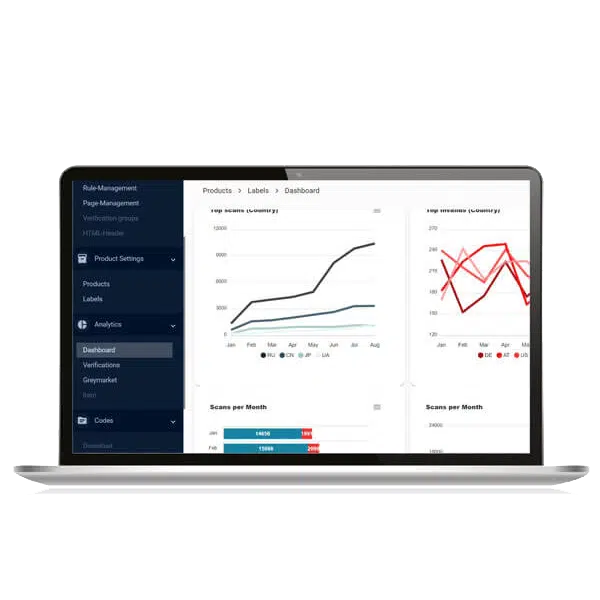
Once units carry identities, every scan is a data point. Consumer scans, retailer checks, field inspections and test purchases each show where a unit really is. A traceability platform such as our Codikett system compares those locations with the intended market and flags anomalies, for example clusters of scans far from the shipment’s destination or one code scanned in two countries.
| Signal | What it tells you | Who usually collects it |
|---|---|---|
|
Consumer scan outside the intended market |
A possible diversion route and the region where stock surfaces |
Automatic, through consumer verification |
|
Duplicate scans of one UID in different places |
A copied code or a reused label |
Automatic alert in the traceability platform |
|
Test purchase from an unauthorized seller |
The exact UID and therefore the original shipment |
Brand protection team or investigator |
|
Price drops on marketplaces |
That stock is leaking somewhere, but not where |
Marketing or e-commerce team |
5. Investigate with evidence, not suspicion
When an alert appears, confirm it with a test purchase, read the UID and look up its shipment record. You now know which partner received the unit, when and for which market. That turns a difficult conversation into a factual one, and it lets you apply the remedies in your agreements, from allocation changes to termination.
6. Measure, adjust and extend
Track a few indicators each month: the share of scans outside intended markets, the number of confirmed cases, the time from alert to identified source, and repeat cases per partner. Brands that detect grey market diversion early usually start with one product line and two or three critical markets, then roll out once the dispatch process runs reliably.
What should you ask a supplier before you start?
If you plan to detect grey market diversion at unit level, your decision is less about the label alone and more about whether the physical and digital parts work as one system. Ask any supplier these questions and document the answers for your internal business case:
- Can the UID sit on a tamper-evident label that shows removal or relabeling?
- Can the UID stay hidden until opening, so codes cannot be harvested in the shop?
- How are unit codes linked to cases, pallets and distributors at dispatch, and which interfaces to ERP or warehouse systems exist?
- Which anomaly alerts are available, and can you set your own rules per market?
- Who owns the scan data, where is it hosted, and is the platform operated under ISO/IEC 27001?
- Can the solution be tested on your real packaging before rollout?
How we help luxury brands detect grey market diversion
We combine physical and digital product protection from one source. Our multi-layer security materials are developed and produced in-house in Austria and tailored to your packaging, and Codikett, our own authentication and traceability platform, helps you detect grey market diversion by turning every scan into channel information. We are certified to ISO/IEC 27001 and ISO 14298. You can read more on our pages for luxury goods and protection against grey market activity, and in our earlier article on tamper-evident pet food packaging, which applies the same principles in a different industry.
Your next step is to decide which units, markets and partners to start with, and which label and code combination fits your packaging. Talk to our experts: on our contact page you can book a free 30-minute call.
FAQ
Grey market diversion is the sale of genuine products outside the channels or territories the brand owner authorized, for example parallel imports or distributors selling into other markets. The goods are authentic, which is why authenticity checks alone do not reveal it.
Grey market goods are genuine products in unintended channels, while counterfeits are fakes that infringe the brand. Both can appear in the same unofficial channels, which is why unit-level identification helps against both.
Diverters sometimes remove or cover codes to hide where goods came from. A tamper-evident label makes removal or replacement visible, so a missing or damaged code becomes a signal in itself.
QR codes can usually be read with the standard smartphone camera, and NFC tags with most current smartphones. Whether a dedicated app is used depends on the experience the brand wants to offer.
Start with one product line and the two or three markets where diversion hurts prices most. Map the intended routes, serialize the units, link them to shipments at dispatch and review alerts monthly before you extend the rollout.
Codikett, our authentication and traceability platform, connects each unit’s identity with its shipment data and scan history. It flags anomalies such as scans outside the intended market or duplicate scans, so your team can investigate with evidence.