














October 2026 | Anti-Counterfeiting and Authentication
Nutraceutical supply chain risk is the chance that a supplement reaches the consumer as a counterfeit, after tampering, or through a channel you never authorized. The exposure is highest at the handovers: contract manufacturing, third-party logistics, marketplace sellers and cross-border resellers. Below we show how to map those handovers, protect each one and measure the result.
Why nutraceutical supply chain risk keeps growing
Supplements are attractive to counterfeiters: margins are high, bottles and jars are easy to imitate, and much of the volume sells online. In the United States, proving authenticity rests largely with the brand. According to the U.S. Food and Drug Administration, FDA does not have the authority to approve dietary supplements for safety, effectiveness or labeling before they are sold in stores or online.
The wider numbers point the same way. According to the OECD and EUIPO, counterfeit goods accounted for an estimated USD 467 billion in global trade in 2021, with hazardous fakes such as medicines, cosmetics and food increasingly prevalent. According to INTERPOL, Operation Pangea XVII (December 2024 to May 2025) seized 50.4 million doses of illicit pharmaceuticals worth USD 65 million across 90 countries and reported growing demand for peptide supplements in Europe, North America and Oceania.
This article is informational and not legal advice. For regulatory obligations, please refer to the official texts for your market.
50.4 million doses of illicit pharmaceuticals seized in Operation Pangea XVII (December 2024 to May 2025)
Interpol, 2025
Step 1: Map where your product changes hands
Draw the physical route of one SKU from the filling line to the consumer and mark every point where it leaves your direct control: co-packer, 3PL warehouse, export distributors, marketplace sellers and the returns flow. Each handover is a place where nutraceutical supply chain risk can enter. Then name the risk at each point:
- Counterfeits: look-alike products carrying your brand, often sold online.
- Tampering and refill: a genuine container that has been opened, diluted or refilled.
- Label harvesting: genuine labels collected from used packs and reapplied to fakes.
- Diversion: genuine product sold in a market or channel it was never meant for, including gray market and parallel trade.
Step 2: Match the protection layer to the risk
No single feature answers all four patterns of nutraceutical supply chain risk, so we build protection in layers that different people can check.
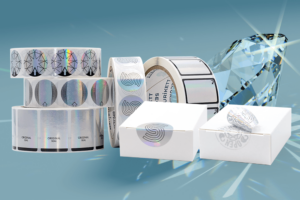
Consumers and pharmacists need tamper evidence they can read at a glance. A closure seal with a VOID effect shows an irreversible message when peeled off, so an opened jar is visible before use. Our tamper-evident seals and tapes are adapted to the container surface and your corporate design. Inspectors and enforcement partners get a second layer, such as holograms, security inks or hidden codes that are quick to check in the field.
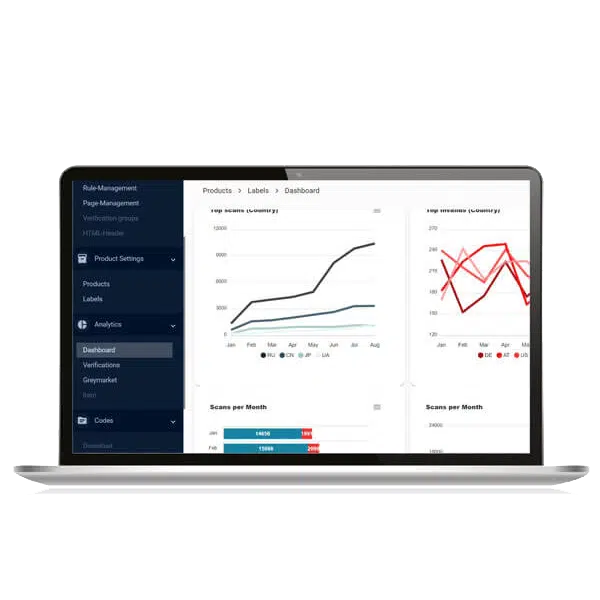
The third layer is digital. A unique, non-predictable identifier on each unit, read via QR code or NFC, lets consumers verify the product and gives you scan data. With product digitalization through CODIKETT, every scan shows where your product actually is, and anti-cloning measures make a copied code stand out.
Step 3: Test on the real container, then pilot
Curved HDPE bottles, glass jars, pouches and induction-sealed closures all behave differently, and storage can be humid or cold. Test every candidate label on the original container with your own application equipment, and check the opening effect after realistic storage. Free sample labels make this quick.
Then pilot where the risk is highest, usually a bestseller in your most exposed marketplace or export market. Define success up front, for example the share of units verified or the number of suspicious scans flagged. Clear criteria make the rollout budget easier to defend.
Step 4: Measure with scan data and act on it
Scan data turns protection into intelligence about your nutraceutical supply chain risk. When one identifier is scanned in two distant regions within a short time, or scans cluster in a country you do not supply, the pattern points to copied codes or diverted stock. Feed these alerts into channel management to protect against gray market activity, and review the feature mix once a year.
How we approach nutraceutical supply chain risk with brands
As a family-owned company founded in 2001, we combine physical tamper evidence and digital authentication from one source, certified to ISO 14298 and ISO/IEC 27001. Every solution is tailored to the brand’s packaging, process and design. See typical applications for protecting and authenticating nutraceuticals.
If you are reviewing your nutraceutical supply chain risk, our experts can help you define the right label and feature combination for your container and channels. Talk to our team or start with free samples.

Reviewing your nutraceutical supply chain risk?
We help you define the right label and feature combination for your container and your channels.